CBSE · Class 11 & 12
The night before the paper, planned honestly.
Tell it the paper, when it starts and how much you’ve actually done. It works out the hours you can really use, a score range you can realistically expect against the pass mark, and a block-by-block plan — including what to drop and when to sleep.
- 10
- papers covered
- 2025–26
- CBSE curriculum
- 4
- taps to a plan
Tight. Pick your battles and commit to them.
4h 2m
of real work, out of 12h on the clock
26–37 /70
realistic range · pass mark 23
Tonight · 10:30 pm → 1:55 am
- 34md- and f-Block Elements
- 34mBiomolecules
- 49mCoordination Compounds
Sleep 5h · 1:55 am → 6:55 am
Revision only · 6:55 am → 8:45 am
Generated by the same engine as the planner. Every number is computed, not written.
Make yoursMethod
Four rules the plan won’t break.
Unit weightage comes from CBSE’s published curriculum. Which units to do, in what order and for how long is arithmetic, and it is deterministic.
A language model writes what to do inside each block — the equation to write from memory, the question type to drill. It is never shown a number it could get wrong.
- 1
Clock time isn’t study time.
Ten minutes off every hour, and an hour at 3 am counts for less than an hour at 9 pm. Twelve hours on the clock is usually about four of real work, and the plan is built on the four.
- 2
No chapter in fifteen minutes.
Every block has a floor. A unit that won’t fit is dropped by name rather than squeezed into a token quarter of an hour, because choosing the loss is what stops a night collapsing halfway.
- 3
A range, not a promise.
You get the score you can realistically expect, next to CBSE’s pass mark — 23 of 70, 26 of 80 — and a plain statement of what one night can’t do.
- 4
It tells you to stop.
Sleep is a block in the plan, not a footnote. Past roughly 2:45 am the advice changes to: go to bed now and use the morning.
Evidence
Moderation, measured.
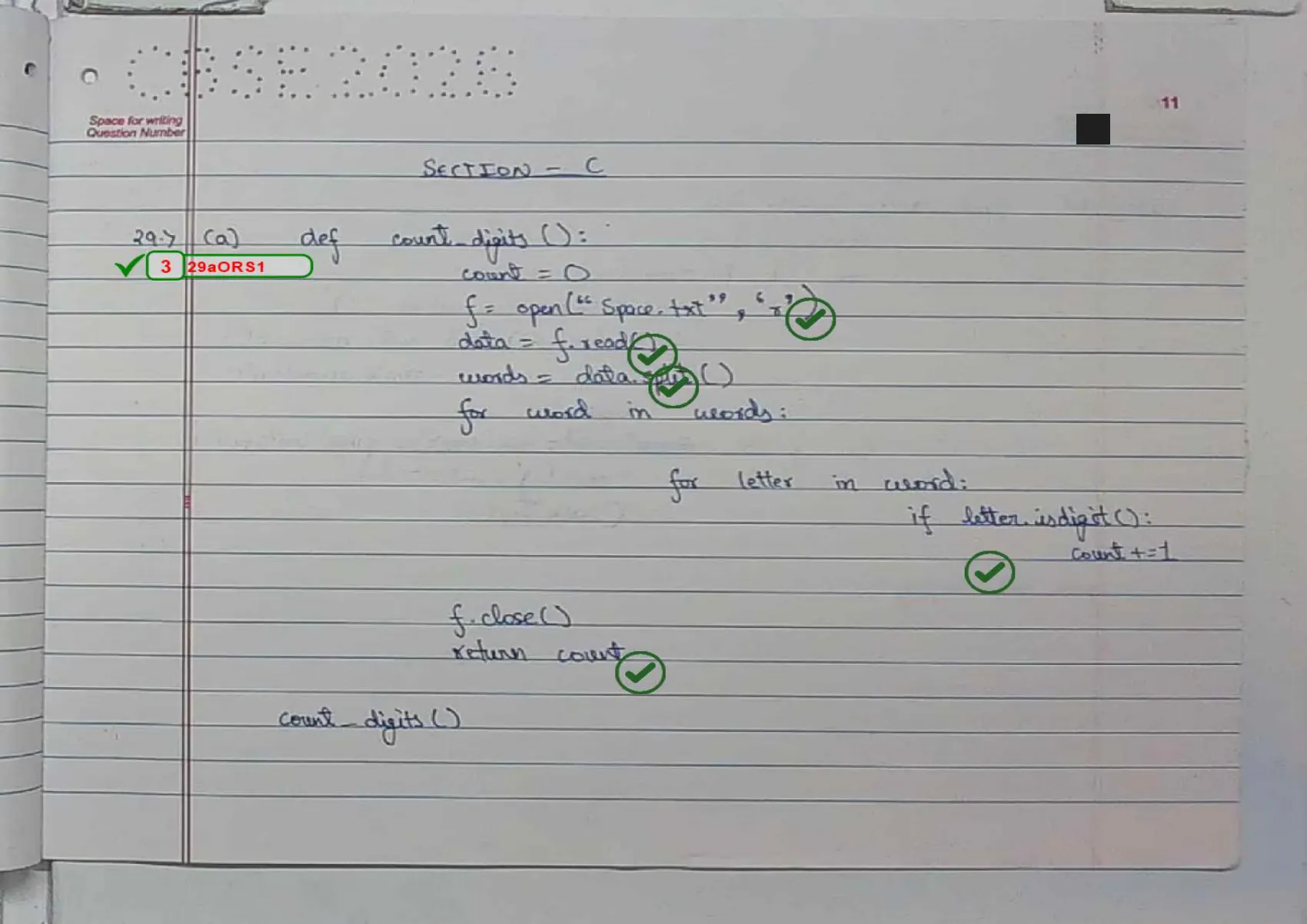
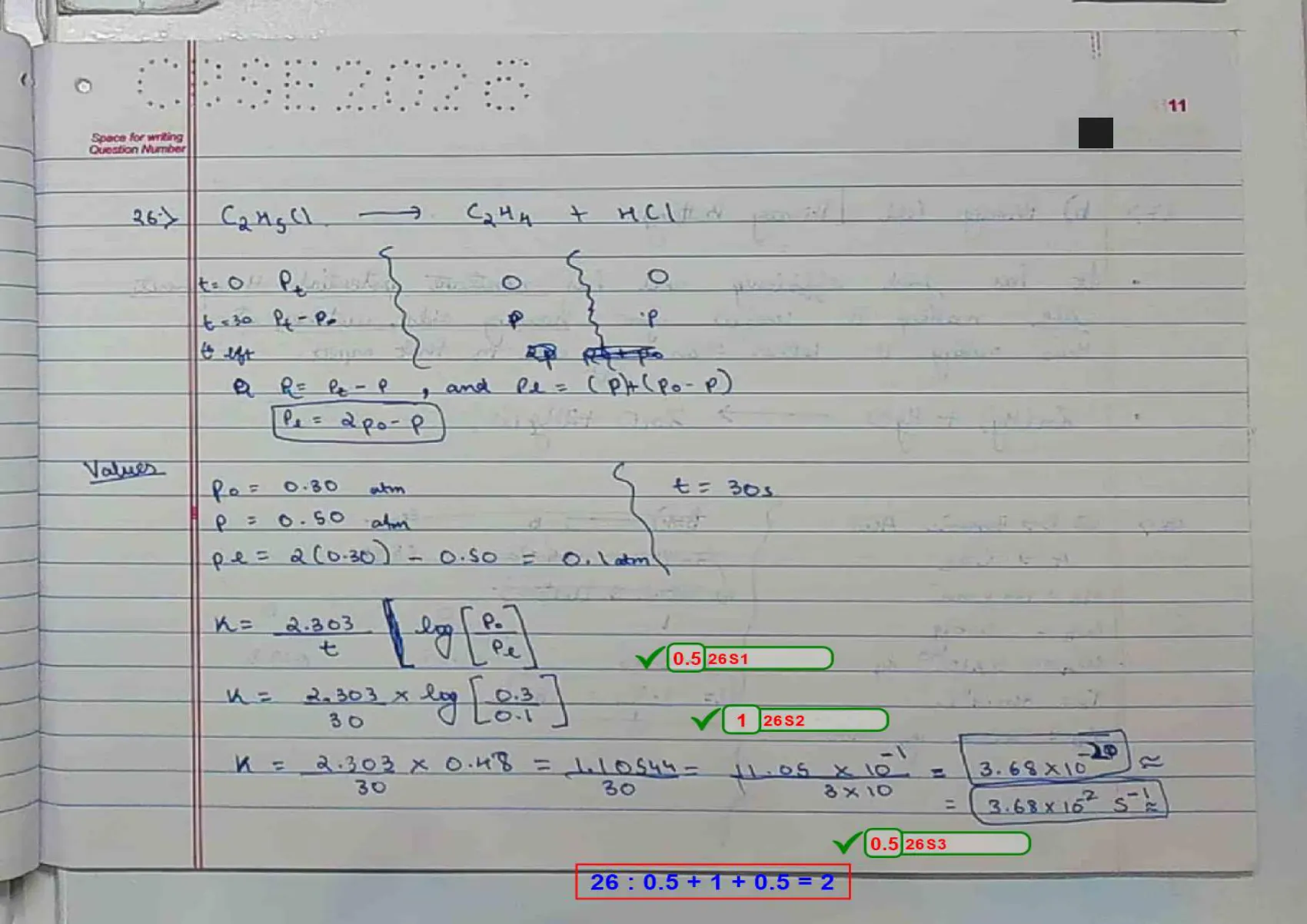
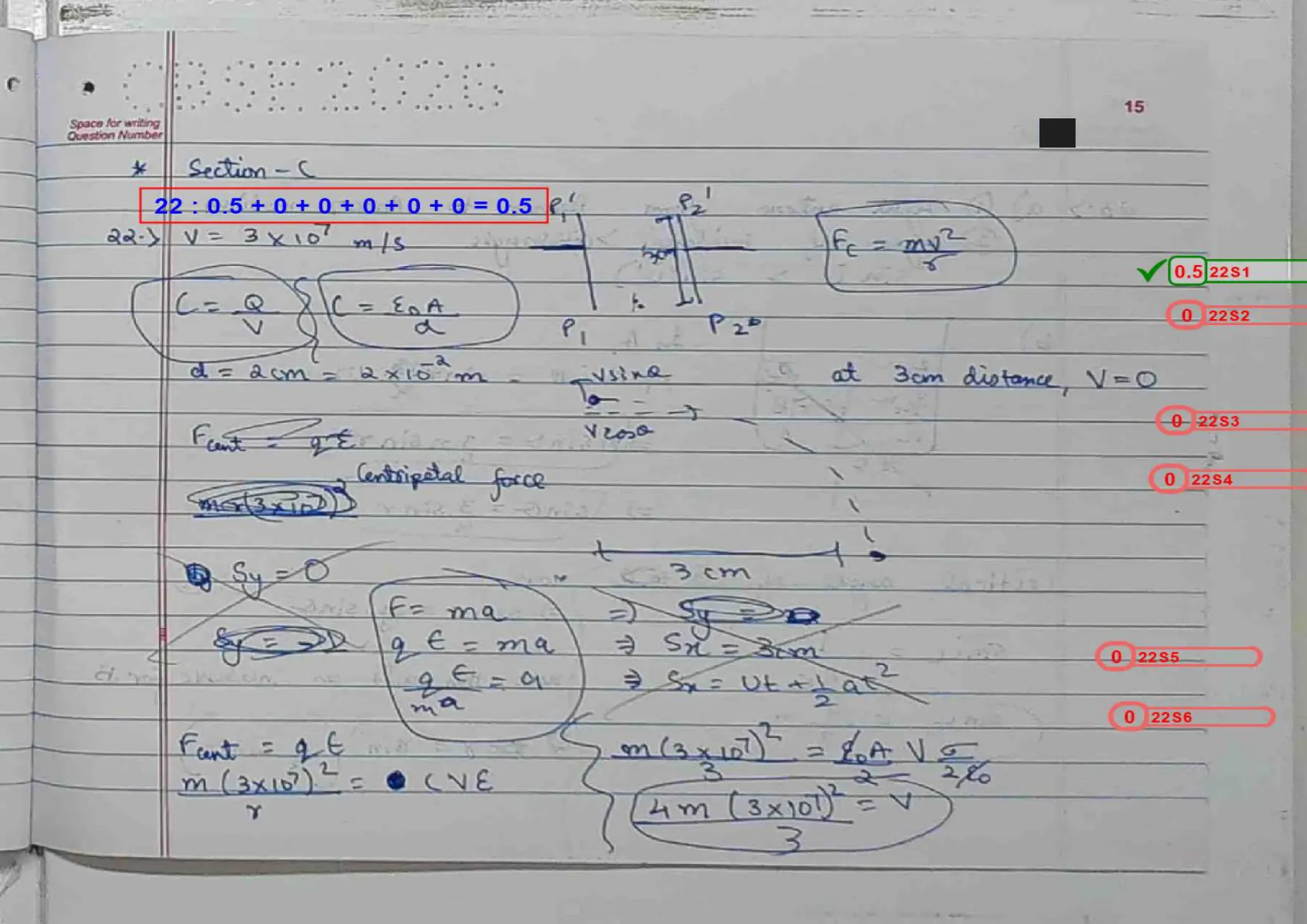
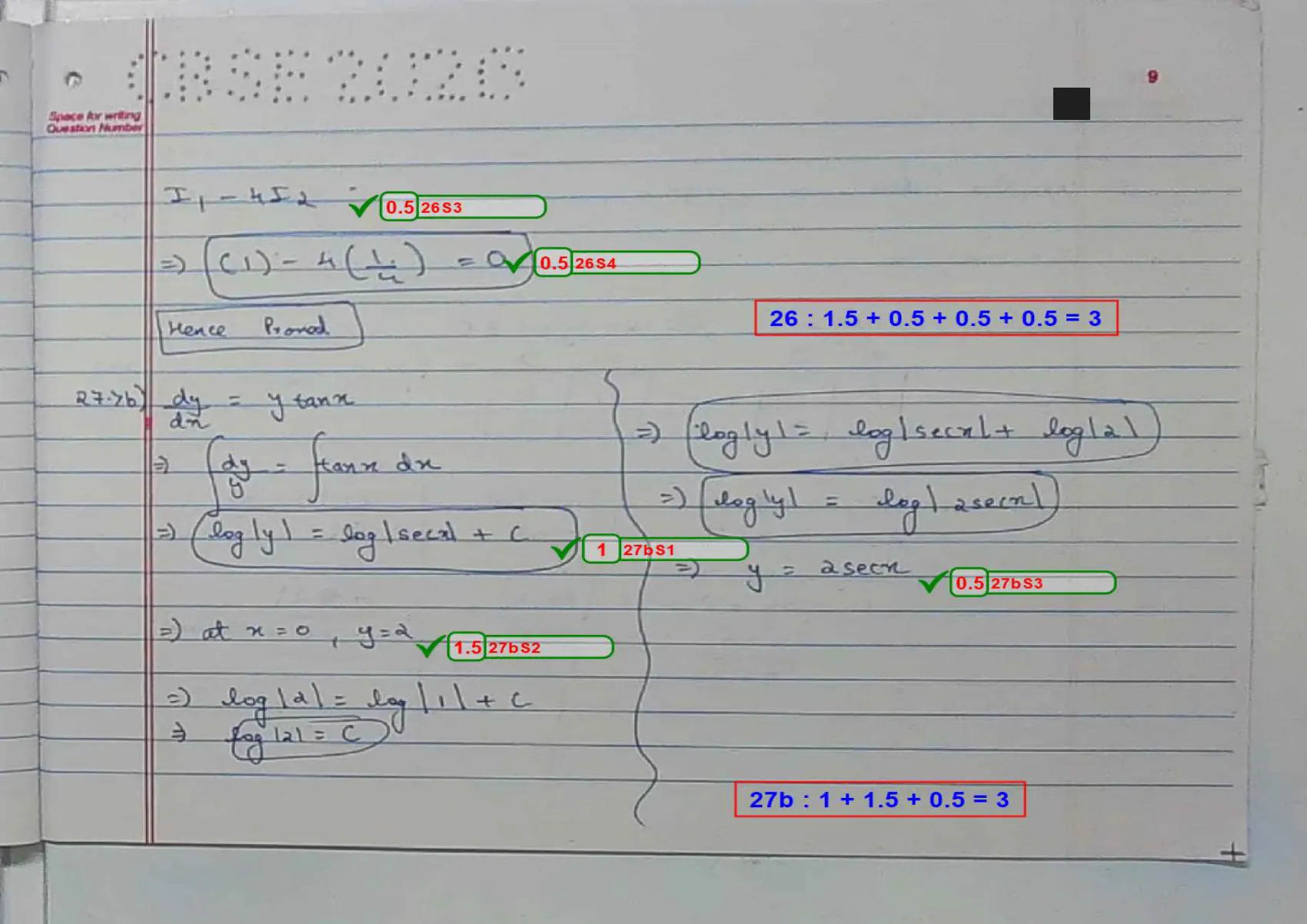
Five evaluated Class 12 answer scripts, bought back from CBSE and lined up against the final marksheet. Three match to the mark — which proves the two fields are the same number. The other two gained marks after the paper was marked.
- +9
- marks added across five papers
- 92.8%
- aggregate, up from 91.0%
- Chemistry52 → 59 /70+7 marks added by moderation
- Physics58 → 60 /70+2 marks added by moderation
- Mathematics71 → 71 /80= — unchanged
- Computer Science68 → 68 /70= — unchanged
- English Core76 → 76 /80= — unchanged
183 scanned pages, published in full.
Every tick, cross, half-mark and blank page, exactly as CBSE returned them. Only the script’s own barcode and stamps are covered — nothing that was written.
Guides
Where the marks actually are.
Unit-by-unit weightage for five Class 12 papers, from CBSE’s published curriculum, with what each unit really asks and what to do first when time is short. The build fails if any table stops adding up to the paper.
All five guides- Physics042 · 70 marksBiggest: Optics, 14 marks
- Chemistry043 · 70 marksBiggest: Electrochemistry, 9 marks
- Mathematics041 · 80 marksBiggest: Calculus, 35 marks
- English Core301 · 80 marksBiggest: Literature, 40 marks
- Computer Science083 · 70 marksBiggest: Computational Thinking and Programming — 2, 40 marks
Reference
Everything else you’d open a tab for.
- NCERT chapters395Every chapter for Class 10, 11 and 12 as a direct PDF from ncert.nic.in.
- Calculators7Best-of-five percentage, attendance, grade points, and what your last paper needs.
- Exam-hall strategyReading time, attempt order, running out of time, and never cutting an answer.
- Printables4Physics and Maths formula walls, organic conversions, and a page for parents.
- Channels & resourcesTeachers worth your time, checked by hand, by subject and class.
- BooksThe few worth buying, and the subject where you should buy nothing.